
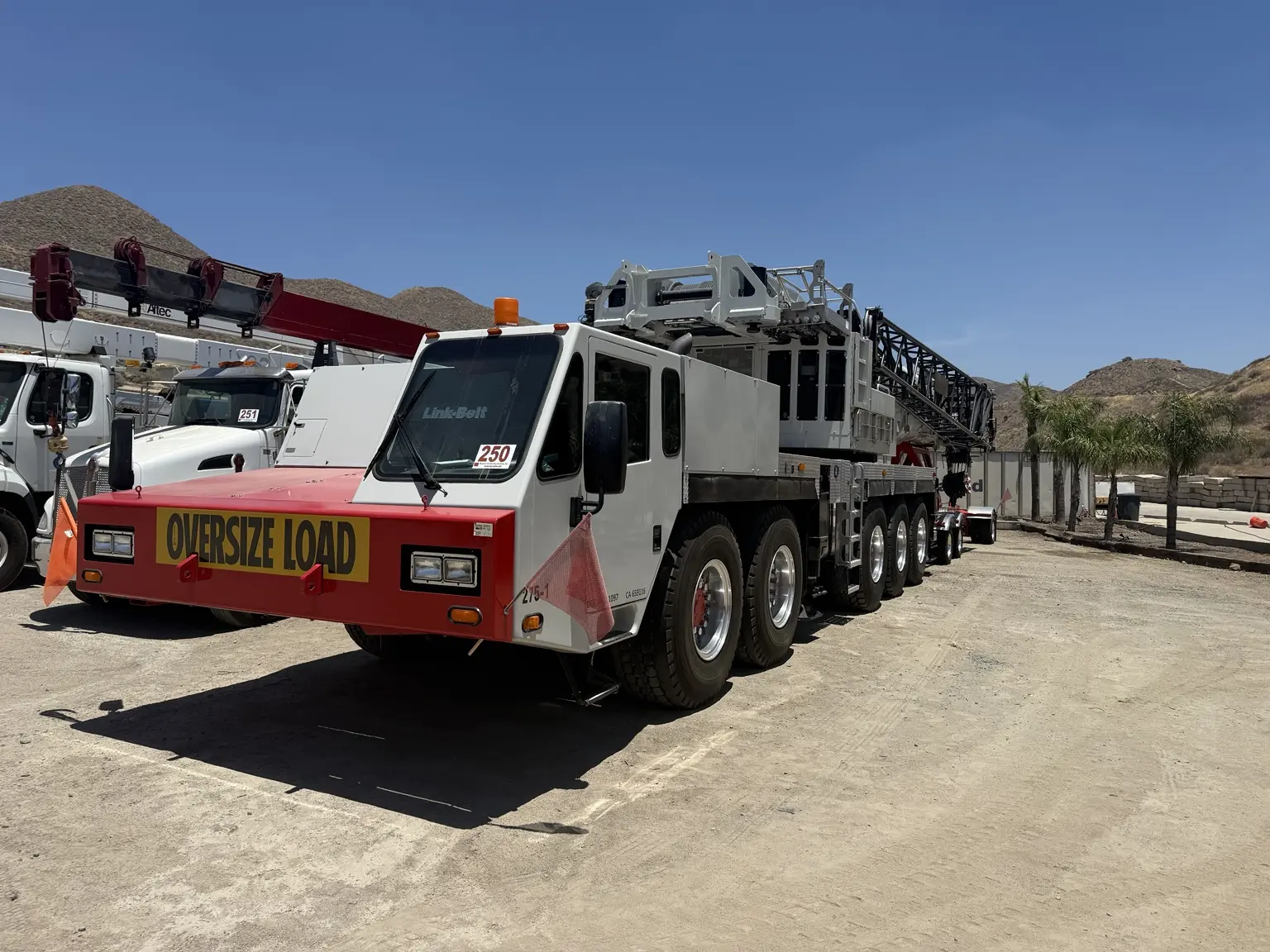
Oversize Load Permit Colorado: 4 Checks Before You Haul
Updated: 1 day ago
Overview
It is written for general contractors, project managers, and facility managers coordinating with heavy haul companies on a schedule someone has already promised to a client.
You will find four things here: the size and weight numbers that turn a normal haul into a permitted one, which agency issues which piece of paper, when an escort stops being optional, and how much calendar to reserve so the date holds. Every figure comes from CDOT, Denver, or the Colorado State Patrol, and we say where.
Table of Contents
Check 1 — The Size And Weight That Trigger A Permit
Check 2 — Which Colorado Agency Issues What
Check 3 — When An Escort Or Pilot Car Is Required
Check 4 — The Timeline That Keeps You On Schedule

Check 1 — The Size And Weight That Trigger A Permit
Colorado's Legal Limits For Oversize Freight And Heavy Equipment Trailer Loads
Four numbers decide most of it.
A load travels Colorado legally at eight feet six inches wide, fourteen feet six inches tall, and eighty thousand pounds gross on the Interstate. Off the Interstate, that gross figure rises to eighty-five thousand. Length works differently than people expect: there is no cap on the overall tractor-trailer combination, but the trailer alone is capped at fifty-seven feet four inches, and a single unit at forty-five feet.
Cross one of those and the load is extra-legal. Not illegal — permitted.
Every one of those figures traces to a specific section of the Colorado Revised Statutes, which is why they move so rarely and why an argument about them ends fast. Overhang carries its own rules: four feet off the front, ten off the rear, before flagging and lighting requirements begin.
Two things catch people new to this. Weight is not one number — Colorado caps a single axle at twenty thousand pounds and a tandem at thirty-six thousand on the Interstate, with the federal bridge formula on top. A load can pass the gross test and still fail on one axle, which is a very different conversation at a Port of Entry.
And the weight the deck feels includes everything riding on it: chains, blocking, the machine's own attachments. The same principle governs a hook, where gross load is always higher than the figure printed on a spec sheet. An experienced oversized load hauler does that arithmetic before quoting. Our post on what a boom truck actually handles covers where light commercial work stays comfortably inside the legal envelope.
Why Rough Terrain Crane Rental Needs A Permit And An All Terrain Crane Often Doesn't
Here is the part that costs a day the first time.
A rough terrain crane is not a road machine. A 130-ton class RT tops out around fifteen miles an hour and weighs roughly 174,000 pounds. It moves between jobs on a lowboy trailer behind a tractor, so every relocation is a permitted haul with a second driver attached.
An all-terrain crane drives itself. But "drives itself" does not mean "travels free."
Look at what the manufacturer publishes. Liebherr rates a 130-ton class all-terrain for road travel at twelve tonnes per axle carrying nine tonnes of ballast. Twelve tonnes is about 26,450 pounds on one axle — already past Colorado's twenty thousand. Across five axles that is roughly 132,000 pounds gross against a legal ceiling of eighty-five thousand. Full counterweight on that machine exceeds ninety thousand pounds on its own.
So the honest version: from roughly the 110-ton class upward, an all-terrain crane travels Colorado highways either on a permit or stripped down, with counterweight, hook block, and jib riding on chase trucks. Below that, smaller carrier cranes often run legal and bare. It is a question of ballast and axle load, not which badge is on the door.
One piece of good news. Colorado names a crane specifically as a non-divisible load, which opens the annual permit path for self-propelled machines up to two hundred thousand pounds — the right product for equipment that exceeds limits routinely rather than once.
Machine class is a permitting decision as much as a lifting one, which is why two quotes for the same Сolorado crane job can look nothing alike. Our glossary defines what an all-terrain crane is, and our comparison of rough terrain versus all-terrain cranes covers where each earns its cost. Anyone quoting crane rental Сolorado work should tell you which side of that line your job sits on before a date gets confirmed — and you can see the classes we run and haul on our crane rental, rigging and heavy haul services page.
Check 2 — Which Colorado Agency Issues What
CDOT Covers State Highways For Heavy Haul Transport
CDOT issues the state permit. Only the state permit.
Applications go through an online system called COOPR, and common configurations self-issue quickly — CDOT targets about two hours, with no guarantee after 3 p.m. Mountain Time. Single-trip permits stay valid five days, and movement runs sunrise to sunset by default.
Fees are modest and worth knowing so nothing on an invoice surprises you. A single-trip oversize permit runs thirty dollars; overweight adds ten dollars per axle. An annual oversize permit is two hundred and fifty, annual overweight or combined four hundred. Those figures sit on CDOT's permitting page, and they do change — so check rather than trust a number you read somewhere last year, including this one.
There is a ceiling on the routine path. Past sixteen feet high, seventeen feet wide, or two hundred thousand pounds gross, a load leaves self-issue and enters a special category requiring review rather than approval. CDOT publishes three to five business days for those, while noting in its own guidance that staffing and volume can stretch it to two or three weeks.
That review is what hits your calendar. When a route crosses structures CDOT's bridge staff must rate, an engineer analyses your specific load against specific bridges before anything rolls. Sound heavy haul logistics means knowing at the quoting stage whether the load triggers it. You can see the portal oversize trucking companies file through if you want the process from their side.
Cities And Counties Issue Their Own — What Denver Rigging And Cranes Denver Crews Run Into
Now the part that actually breaks schedules.
A CDOT permit authorises state highways. It does not authorise one city street or one county road. Every municipality, every county, and the E-470 toll authority issues separately, on its own timeline. CDOT states it plainly: obtaining permission from cities and counties is the permittee's responsibility. There is no single application that clears them all.
Denver is the clearest case, and the numbers are not gentle.
The city asks for a minimum of ten to fourteen business days to review a Special Moving Permit. It bans oversize movement above thirteen feet on I-25 between I-70 and I-225, sending those loads back to CDOT for an alternate. It prohibits turns inside the downtown box bounded by Colfax, Broadway, and the numbered streets down to 14th, except at intersections. Daytime weekday movement is restricted, with exceptions running six in the evening to seven in the morning, plus weekends and holidays.
And one line matters directly to anyone booking crane rental Denver work: Denver requires that extra weights be removed from a crane before it moves. That is stricter than the state rule, and it turns one machine move into a small convoy. Denver's own permit document sets all of it out.
Add it up and a Denver crane job with a two-week window has spent its float on paperwork before anyone opens a load chart. Contractors comparing crane companies in Denver on hourly rate rarely ask who handles that sequence, and the answer moves the delivered price more than the rate does. The same applies to a heavy equipment rental Denver booking headed downtown, or a Denver crane rental that needs street occupancy for staging — a separate permit again, with a traffic control plan drawn by a certified supervisor.
The pattern repeats elsewhere with different numbers.
Colorado Springs asks for five business days and caps city-street height at thirteen feet six inches. Past fifteen feet wide, two police escorts; past fifteen feet high, a bucket escort by an electrical contractor alongside a police escort. Crews running heavy hauling services Colorado Springs projects plan around that, because annual applications above fifteen feet are not accepted at all.
On the Western Slope, Grand Junction requires a Letter of Authorization for oversize movement on city streets and maintains a designated truck-route network. Mesa County runs its own permit with a two-working-day turnaround and a twenty-five thousand pound per-axle ceiling. Any crane service Grand Junction CO operator works inside both.
Garfield County requires an annual or single-trip permit, names the county as additional insured, and requires the haul-route map to ride in the vehicle. Weld County allows hauling only between daylight and dark, never in inclement weather. Boulder and Larimer counties each run their own. Delta and Montrose do not publish a standalone process online, which means a phone call rather than an assumption.
E-470 deserves its own mention because people forget it is not CDOT: two business days to review, no oversize movement during morning or evening peak, and a pilot car required at fifteen feet wide.
The sectors where this stacking bites hardest are on our industries we serve page.
Check 3 — When An Escort Or Pilot Car Is Required
Width, Height And Length Thresholds Wide Load Trucking Companies Work To
Escort requirements are not one number, and this is where generic guides get it wrong.
Colorado sets thresholds by width, height, length, and route class, using a colour-coded map of the state highway system. On the most common class of route, a load wider than thirteen feet needs an escort on a two-lane highway; past fifteen feet, front and rear. Height brings its own trigger: above sixteen feet, a front escort carrying a height pole, and above seventeen feet six inches, a route survey. Length triggers an escort past eighty-five feet on mountainous two-lane roads — considerably sooner than on flat four-lane.
After dark the rules tighten. Above fourteen feet wide, oversize movement is prohibited at night under a standard permit.
Pilot car operators are certified, insured, and carry specified equipment. This is a qualification, not a pickup with a flag. The rules and the escort route map both live on CDOT's permit documents page, and competent heavy haul carriers check the map before quoting rather than after.
Rush hour restrictions apply in metro areas, and movement is restricted around Memorial Day, Independence Day, and Labor Day. Established lowboy trucking companies plan around those windows without being asked.
The Route Changes The Answer For Heavy Hauling In The Mountains
Colorado's terrain writes rules no permit overrides.
The Eisenhower–Johnson tunnel on I-70 caps height at thirteen feet eleven inches and bars placarded hazardous loads year-round, pushing them over Loveland Pass. Loads wider than eleven feet must stop and call for clearance before entering. On CO 82, Independence Pass prohibits any vehicle or combination thirty-five feet or longer, at all times, with no permit available.
Winter is where people get the rule wrong, so it is worth stating carefully.
From September first to May thirty-first, commercial vehicles over sixteen thousand pounds must carry chains on designated corridors — I-70 west of Morrison, US 550, US 160 west of Walsenburg, and several others. That is a carry requirement, in force regardless of weather.
Separately, CDOT activates the chain law when a storm demands it, and activation lasts as long as conditions do. While the chain law is actively in effect, oversize movement is not allowed. The State Patrol puts it in capital letters. An overweight-only load can chain up and continue; an over-dimensional one waits. The same prohibition applies in hazardous conditions generally — wind, ice, mud, rock, reduced visibility — whether or not chain law has been called.
One more layer on that corridor: between December first and March thirty-first, oversize movement on I-70 between West Vail and Morrison is barred westbound on Friday afternoons and weekend mornings, and eastbound on weekend afternoons.
None of that stops work. It shapes when work happens, which is a different problem and a solvable one. Our post on planning hard-to-reach mountain sites covers the passes and seasonal constraints in more detail, and our home page shows the regions we run from.
Check 4 — The Timeline That Keeps You On Schedule
Lead Times Oversize Load Trucking Companies Plan Around
Work backward from the constraint, not forward from the permit.
A routine single-trip state permit can issue the same morning, and that speed is exactly why people underestimate everything else. A load requiring bridge analysis is a different animal — three to five business days officially, two to three weeks when the queue is long.
Then stack the local layer. Ten to fourteen business days for Denver. Five for Colorado Springs. Two for Mesa County and E-470. Counties on their own schedules. And if a utility line has to be lifted or de-energised, that timeline belongs entirely to the utility and is frequently the longest pole on the job.
For construction equipment hauling against a bid-driven date, three to four weeks on anything bridge-critical is not conservative. It is arithmetic. Good heavy haul shipping planning starts when final dimensions and the delivery address are known, not when the crane is booked.
Because equipment bills from the moment it leaves the yard, lead time carries a cost. Our glossary explains how portal-to-portal billing works and why travel is often the widest gap between two quotes. Reputable equipment hauling services show you that separately rather than folding it into an hourly figure.
What A Delayed Permit Costs On Heavy Machinery Transport And Heavy Equipment Hauling Jobs
This is the question most guides skip, and the one to settle first.
In practice the carrier or crane company pulls the permit, because permits are vehicle- and route-specific and the operator carries the compliance risk. But CDOT assigns responsibility to the permittee, and on some scopes that is the general contractor. Some outfits use a third-party permit service. All three arrangements are normal. None is safe to assume.
So put it in the scope of work: who obtains the state permit, who obtains each local one, who arranges and pays for pilot cars or police escorts, and who owns the route survey.
On our jobs, permits and escorts bill as a pass-through at cost plus ten percent — not folded into an hourly rate, not estimated, the actual fee visible on the invoice. That is the standard worth asking any provider for, and it separates serious heavy equipment transport companies from a number on a page. Contractors searching heavy equipment transport near me usually find that proximity matters less than whether anyone did this work before quoting, and our glossary covers why mobilization belongs on a quote as its own line.
Final Thoughts
The thresholds are published. The tunnel height has not moved in years. The chain law dates are statutory and the pass restrictions permanent. What separates a haul that holds its date from one that slips is whether somebody worked the route, the jurisdictions, and the lead times while there was still room to act on the answers.
Four questions get you most of the way. How wide, how tall, how heavy is the load with everything on it. Which state highways, city streets, and county roads does the route touch. Does any dimension trigger an escort on that route class. And how much of your schedule is already spent before the first application is filed.
We handle the transport and the lift together, so routing and permitting sit in the same conversation as the crane rather than in an email chain between two vendors. Our about us page covers how, and it is why contractors booking crane rental services Colorado work weigh accountability alongside rate.
Send us the dimensions, the weight, the origin, the destination, and your target date. We will tell you which permits the move needs and roughly how long each takes — including the ones that are not ours to pull. Start with our request a quote page and we will work through it.
_edited.png)


Comments