
top of page
Call (303) 923-8902

Rough Terrain Crane Vs. All Terrain Crane: Choosing For Your Site

Aug 25
9 min read

Overview

Most crews choose a crane by tonnage. Tonnage is the last thing that should decide it.


What picks the machine is the ground it stands on, the road that brings it there, and the room left around it once the outriggers are down. Get those three right and the tonnage follows.


This guide answers four things: what each class was built to do, how they behave on dirt versus pavement, which one truly fits a tight lot, and the four questions that settle your choice before you request a mobile crane rental. It is written for general contractors, project managers, and facility managers whose schedule depends on a lift landing on the promised day.


Table of Contents

  • What Each Crane Is Built To Handle

  • How They Differ On Rough Ground Vs. Open Road

  • Which One Fits Tight Access And Which Needs Room

  • How To Tell Which One Your Lift Actually Needs


What Each Crane Is Built To Handle

Rough Terrain Cranes And All Terrain Cranes: One Cab Or Two

Count the cabs. That single detail explains almost everything else.


A rough terrain machine has one. The operator drives to the pad and lifts from the same seat. One engine turns the wheels and the winch. Four oversized tires, four-wheel drive, and crab steering carry it across graded dirt that would bury a road chassis. rt cranes exist for one reason: some ground cannot be improved before lift day, and pretending otherwise costs you a mobilization.


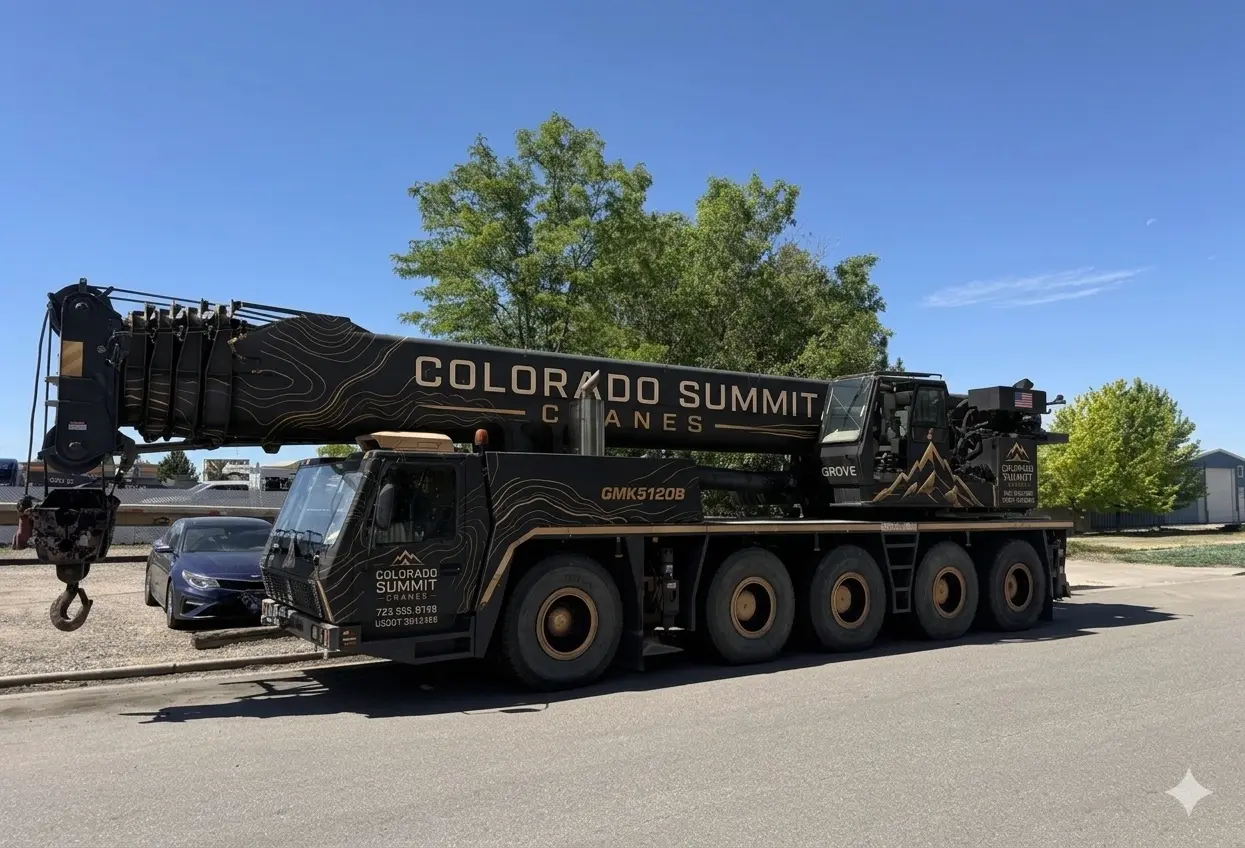
An all-terrain has two cabs. One at the front for the highway, one on the turntable for the pick. It rides five axles through the 110 to 150 ton range on independent suspension.


We own and operate both. Our rough terrains run 50, 60, and 90 tons; our all-terrains cover 110, 130, and 150. Above that, we plan and manage picks up to 600 tons through a vetted partner network, which is a different conversation with its own lead time.


Our glossary breaks down every class you will meet on a quote, and gives you one line worth carrying into a bid meeting: a rough terrain crane is built for dirt, grade, and mud.


Liebherr, a manufacturer known far better for all-terrains, explained its reasoning when it added rough terrains back to its lineup. That announcement is a useful outside read on why both classes survive.


Why Mobile Crane Classification Starts With The Chassis

Above the turntable these machines are near twins. Telescopic boom, load chart, outriggers, identical physics. The class is decided underneath, by the carrier.


A rough terrain carrier was never built for public roads. Grove rates the 90 ton RT890E at 22 miles per hour and the 130 ton RT9130E-2 at 15. Those are yard speeds. Every move rides a lowboy behind a tractor, so a second truck and a second driver land on your invoice before the hook moves.


An all-terrain crane is a road vehicle carrying a crane. Inside Colorado's legal envelope of 14 feet 6 inches tall and 8 feet 6 inches wide, it drives itself to you. Our glossary states the trade cleanly: it travels the highway at speed like a truck, then works off-pavement like a rough terrain unit, and that dual ability is the point.


Liebherr describes the same chassis logic from the factory side in its overview of the LTM range.


How They Differ On Rough Ground Vs. Open Road

Mud, Grade, And Energy Pads: Where Crane Rough Terrain Setups Win

On unimproved ground, the rough terrain machine stops being a preference and becomes the answer.


Picture a Western Slope pad in April. The approach is a private road nobody maintains to a standard. The surface freezes overnight and turns soft by noon. The nearest hardstand is forty minutes behind you. Our hard-to-reach sites post names this risk precisely, because energy pads reached by unpaved private roads are where a bad assumption stops costing an afternoon and starts costing a remobilization.


There is a second advantage most buyers never ask about. A rough terrain machine can travel with a suspended load on rubber, which saves resetting on outriggers four separate times across a spread-out site. The limits are strict — Grove holds on-rubber work to 75 percent of tipping load against 85 percent on outriggers, boom centered, swing lock engaged, no jib erected, travel at a creep. Useful. Not unlimited.


This is why rough terrain cranes for rent dominate energy and remote industrial work, and why a 90 ton rough terrain crane rental is often right on a site a highway machine could not physically reach. Our boom truck guide puts it bluntly: what type of crane is ideal for rough terrain has one honest answer.


To see which Colorado sectors this work covers, our industries we serve page maps the projects to the terrain they sit on.


Highway Speed, Lowboys, And What Moves All Terrain Crane Rental Rates

Now the money, because this is where two quotes for the same lift stop matching.


Billing runs portal to portal. The clock starts when the machine leaves the yard, not when it reaches you. A rough terrain unit adds a lowboy, a tractor, and a driver to every relocation it makes. An all-terrain adds none of that on a legal route, which is why an all terrain crane rental can beat a smaller machine on a job forty miles out, and why comparing crane rental rates without comparing travel tells you almost nothing.


Size reverses the advantage. Larger all-terrains shed counterweight onto separate trucks to meet axle limits, and every truck carries its own paperwork. Colorado single-trip permits stay valid five days, movement runs sunrise to sunset, and anything over 12 feet wide or 85 feet long becomes daylight-only. Routing matters too: the Eisenhower Tunnel caps height at 13 feet 11 inches and pushes anything taller over Loveland Pass. CDOT publishes current thresholds in its permitting information.


That paperwork is the gap between same-day and next-day mobilization on our owned fleet, and five to ten business days on the largest partner machines. Our boom truck post frames the trade in a line, noting an all terrain mobile crane does both, at a real cost in permits and lead time. Near the yard, a rough terrain crane rental frequently wins on speed alone.


Which One Fits Tight Access And Which Needs Room

Outrigger Spread And Tail Swing Across Types Of Mobile Cranes

Here is the assumption that costs people the most money, and the numbers that end it.


Almost everyone believes a rough terrain machine fits a tight site better. Compare published figures across types of mobile cranes at matched capacity and it falls apart. Grove's 130 ton RT9130E-2 spreads outriggers about 27 feet 10 inches with a 14.3 foot tail swing. A 130 ton class all-terrain such as the Liebherr LTM 1130-5.1 sets down at roughly 26 feet 6 inches with a 13.8 foot tail swing. The all-terrain is marginally narrower on the ground and turns tighter behind the cab.


So an all-terrain does not automatically eat more of your lot. What it needs is a road-legal approach and somewhere to put its support trucks.


The charts settle one more argument. Partial outrigger extension is not a shortcut — it is a separate column with lower ratings, printed beside the full-spread figures. Grove's product guide for the RT9130E-2 shows all three settings in its published load charts, and the all-terrain equivalent appears in Grove's data for the GMK5150L. A 130 ton rough terrain crane rental does not lift 130 tons on a half spread, and no chart anywhere says it does.


Staging Room, Counterweight Trucks, And When A Carry Deck Fits

Working footprint is what buyers ask about. Staging is what actually stops the job.


A machine that arrives complete needs its own square footage and nothing more. A larger all-terrain arriving with counterweight on trailers needs parking for them, room to swing sections into place, and billable assembly time before the hook moves. On an infill lot with cars down one side, that is the whole difference between lifting this week and not lifting at all.


When nothing full-size fits, the answer moves sideways rather than up. A carry deck crane works inside a plant or on a congested urban lot. On an open, level pad with room to spare, all terrain cranes for rent hand you reach and capacity without charging for terrain capability you will never touch.


We do not guess at any of this — we engineer it. Every pick gets a software-modeled 3D lift plan covering crane configuration, load chart verification, swing path, and outrigger placement, and critical picks get a plan sealed by a licensed engineer. Our lift planning and site logistics services page covers how the survey, the model, and the staging plan come together before a date gets confirmed.


Infill Ground, Voids, And Overhead Lines On Cranes Denver Projects

Front Range ground fails differently than mountain ground, and it earns its own paragraph.


The soil is Pierre Shale and expansive clay. The Colorado Geological Survey measures swell force from these soils at up to 30,000 pounds per square foot, and moisture moves that number through the year. Infill lots stack a second problem on top: backfill, old basements, vaults beneath the sidewalk. In 2015 a crew lifting a crane at a RiNo site watched the ground open beneath it, and Denver Fire pointed on scene to suspected void space under the setup. Capacity had nothing to do with it.


Overhead lines set the other boundary. Minimum approach distances start at 10 feet up to 50 kV, widen to 15 feet through 200 kV, and 20 feet past that, with every line treated as energized until the utility confirms otherwise. Occupy a lane and a city permit with an approved traffic control plan joins the list.


Where the crane can sit, not how big it is, decides the day. As our lift plan post explains, when a crane cannot sit where the math wants it, radius grows, and capacity drops with it. That sentence explains most disappointing quotes on the Front Range.


Buyers comparing crane rental Denver options and cranes Denver CO listings usually start with hourly rate. On a constrained lot, Denver rigging and honest ground assessment decide the outcome long before the rate does.


How To Tell Which One Your Lift Actually Needs

What Type Of Crane Is Ideal For Rough Terrain? Four Site Questions

Four answers select the machine, and you can supply all four without a rigging background.


What does the load weigh with every sling, shackle, and spreader attached, and how far out does it land? Together these set your capacity. Rated tonnage applies at the shortest radius and drops sharply from there. Most of the industry treats anything landing above 75 to 85 percent of the chart as a critical lift; we draw our sealed-plan line at 85 percent.


Is the approach paved, and is the ground known or assumed? Paved and known opens the field. Unpaved, freshly graded, or wet narrows it fast, and a site survey stops being optional.


How much room surrounds the setup, counting support trucks and not just the crane?


How many times does the machine have to move during the job? One setup suits almost anything. Six setups across soft ground suits exactly one thing.


Now put them together. Unpaved approach with one or many setups on the same pad points to a rough terrain machine. Paved approach with capacity or tip height beyond the rough terrain range points to an all-terrain. Paved, light, and low points to a boom truck. Heavy and multi-day points to a crawler. Tight and enclosed points to a carry deck. That is the whole decision, and four honest answers get you there.


Our boom truck guide approaches the same threshold from below, listing the moment a job outgrows the light class, because four conditions move the job up.


Every crane for construction site decision runs through those four answers. Nobody can quote a crane from a description alone, and ranking mobile crane types by tonnage tells you the least useful thing about them. Our approach to planning every lift covers how we work through it with you.


When Neither Fits: Boom Truck Vs Crane And Lattice Boom Crawler Crane Jobs

Sometimes the right answer is neither machine in the title.


A rooftop unit on a paved lot, a bundle of roofing material, a modest steel package — a boom truck arrives road-legal, sets outriggers in minutes, and finishes before a larger machine finishes assembling. We run 30 and 40 ton boom trucks for exactly this work, and paying all-terrain rates for it is just paying more.


At the far end, a multi-day pick with heavy steel or a large tank set belongs to a lattice boom crawler crane. Tracks spread the load across soft ground, the machine stays put for the week, and its transport and assembly time earn themselves back. When height rather than weight is the obstacle, a luffing jib lifts a load up and over where a straight boom cannot reach.


An rt crane rental is right for a large share of Colorado work. It is not right for all of it, and we would rather tell you that at the quote stage than on lift day.


Send the weight, the radius, the height, the address, and your target date through our request a quote page, and we will tell you which side of the line your lift sits on.


Final Thoughts

Load charts do not change. Soil behaves the way the geology says it will. Permit thresholds are published and the tunnel has been the same height for years. Almost nothing about this decision needs discovering on lift day.


What separates a lift that holds its date from one that slips is rarely the crane. It is whether the ground, the approach, and the staging got settled while there was still time to do something about them.


We dispatch across the Front Range and from resident yards on the Western Slope, running the mountain corridor from both, with an NCCCO-certified operator and signal person on every pick. We do not hand over bare iron. Contractors weighing Denver crane companies against other providers usually find that accountability outlasts the hourly rate.


Describe your site early, and describe it honestly. Then the machine picks itself.

Comments


Recently Added

bottom of page